
Expanding Role of AI and Collaboration in Pediatric Epilepsy Research: Anup Patel, MD
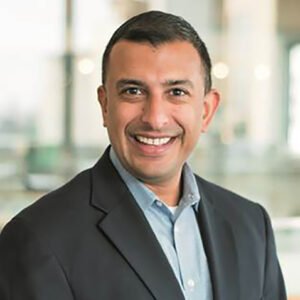
AnUP PATEL, MD
TRANSCRIPT
Can you discuss some of the current work and initiatives underway within the Lennox-Gastaut syndrome special interest group at PERC?
Anup Patel, MD: The LGS special interest group (SIG) for PERC has been so active. We have 2 really dynamic leaders who have done a lot of great things about getting us organized. What we've done recently is we've looked at what are certain biomarkers that we see as it relates to Lennox-Gastaut syndrome that help maybe inform possible surgical care.
We also have put out a statement around some of the gaps that we're seeing in Lennox-Gastaut syndrome and how referrals to surgery centers and surgical neuromodulation could be really important and helpful for these kids.
Right now, what we're looking at is something that I think is super cool. How can we learn using AI or large language models to help us find and inform the trajectory and history of kids who have Lennox-Gastaut syndrome? So we're trying to trace them from the beginning, when they get infantile spasms or if they get that through their spectrum, to see again, are there any biomarkers on EEG or within their clinical signature that maybe help us predict those that are going to go on and develop Lennox-Gastaut syndrome.
The last thing that we're kind of looking at is how can we come together as a community of LGS providers and document in a more standardized format using certain elements that we know are crucial to the diagnosis.
How have the priorities and goals within this group evolved over time?
The evolution of how we approach LGS and the research in it is robust in the sense that you just need to first find passionate people who want to answer questions that we have no answers for, and we have so many of them.
And I think then it's about organizing ourselves around what are the priorities for the community in LGS. An important stakeholder in our LGS SIG for PERC is our connection with the Lennox-Gastaut Syndrome Foundation. In fact, Tracy Dixon-Salazar, PhD, is a member of our SIG. She's been obviously very active and has a lot of science background that helps us understand what is important to the community and how we can go ahead and start to prioritize that work.
Can you discuss the ongoing grants focused on Lennox-Gastaut syndrome and status epilepticus?
This is where we're going to really learn how large language models and artificial or augmented intelligence can really inform our care and care trajectories to the hopes of improving outcomes.
I'll start with the Lennox-Gastaut Syndrome Foundation grant: we were lucky to get a small pilot grant to look to see if a large language model can read all of our clinical notes to find kids who are missing the diagnosis of Lennox-Gastaut syndrome, but also to compare it to a gold standard.
We have a very tight gold standard registry that's part of another research grant through PCORI, and so we can take those patients who have verified Lennox-Gastaut syndrome, teach the model to find that information in the records, and then try to use that outside of that cohort to see if we're missing anybody.
Then the goal and hope is to work amongst the PERC LGS SIG to create a grant opportunity at the federal level for all these centers to start to do the same there and expand that to the nation or even possibly worldwide.
That then led to a PERC grant. One of the greatest things that PERC is now offering is pilot grants for research. We've never been able to do that, and it's been an amazing growth opportunity for PERC. Krista Eschbach, MD, who got one of these grants, wants to look at status epilepticus in kids.
The idea is, again, can we train a large language model to find a kid who presents to the emergency department with status while reading notes and other information, and then also understand when and what medications they got and how that led to whatever outcome they had.
We're piloting that at Cornell, Boston Children's, Nationwide Children's, and Children's Colorado, with Krista as the PI. And that would never have been possible without the grant money that we received from PERC.
What has excited you most at this year’s AAN Annual Meeting, both within epilepsy and across neurology more broadly?
I think the answer globally is how we are going to incorporate augmented intelligence and different technological solutions to the issues that we have, both from delivering care for whatever disease state we have in front of us versus how we can become more efficient in our care practices so we can now have more time to deliver that care to the patients and caregivers that we want to help in a lot of ways.
Throughout this meeting, you're seeing many presentations around that facet, whether it's how do you use it to document your clinical information, how do you use it for research quality, etc.
In addition, we're also talking about wearable technologies. After this, I'll be giving a talk on that paper that we just published that was featured in NPR this morning about how people are coming to neurology providers looking to get their data evaluated that's available on these smart technology devices like the Apple Watch or a ring or some sort of other technology.
You're starting to see that flavor bubble throughout the academy and various disease states.
What areas of epilepsy research or quality improvement do you think deserve greater focus moving forward?
I think it's really important that research is done in the communities that we live in and those that are underserved. There's still a lot of opportunity to really learn from each other and collaborate.
One of the greatest parts about PERC is it brings so many of us together to start answering these questions. But more importantly, it also gives us access to data in other regions of the United States that we previously didn't have access to. So, we can have this collective learning and collaboration on solving the problems.
Whether you're living in Ohio or you're living in Arkansas, it doesn't matter. The care should not be any different.
And then standardization of outcome work. So we know there's great evidence in certain areas of epilepsy, specifically pediatric epilepsy, and driving quality improvement using those evidence-based guidelines to make sure our patients are getting their best outcomes and living their best quality of life. I think that is an important area that we could really focus on moving forward.
Transcript edited for clarity.